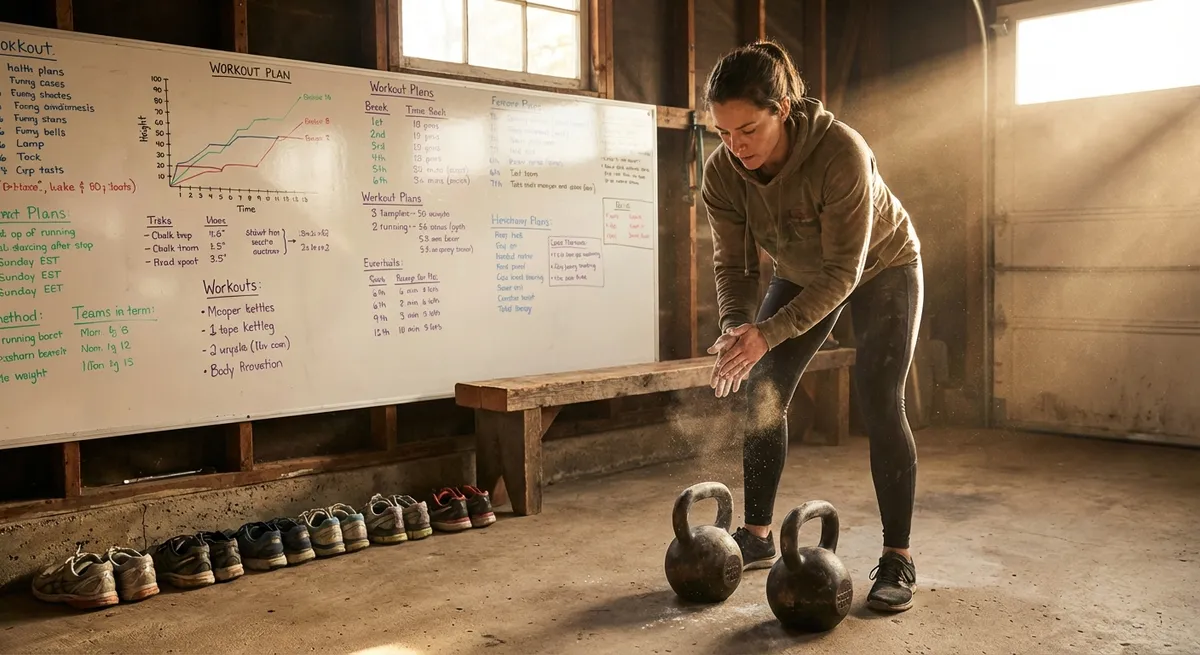
This isn’t about perfection. It’s about building a record you’re proud of, day by day. Let’s turn your workout tracking into a powerful accountability engine that keeps you showing up, even when motivation dips.
Why Tracking Your Workouts Changes Everything
Tracking isn’t just data—it’s your story in numbers, reps, and minutes. When you write it down or log it in an app, you stop guessing and start knowing.
You’ll see exactly how often you move, how hard you push, and how consistent you really are. That kind of clarity cuts through excuses fast. Instead of “I think I worked out three times last week,” you know it was two—and that honesty becomes fuel.
Progress also becomes visible. Maybe your weight on the bar hasn’t jumped dramatically, but your rest time is shorter, your pace is faster, or your total weekly minutes are higher. Those gains are easy to miss if they’re not written down.
Most importantly, tracking builds a feedback loop. Work, record, review, adjust, repeat. That loop keeps you accountable to your goals, your plan, and your future self—not just your current mood. When motivation fades (and it will), your workout record becomes proof that you are the kind of person who follows through.
Tip 1: Make Your Tracking Method So Simple You Can’t Avoid It
Accountability dies when tracking is annoying. Your method has to be frictionless.
Choose a system that matches your lifestyle and tech comfort:
- A dedicated fitness app or wearable if you love data and visuals
- A basic notes app with a simple template you copy daily
- A paper notebook you keep in your gym bag or by your workout space
What matters most is this: you can start recording within 10 seconds. No overthinking, no perfect template, no color-coding required.
Start with just the essentials:
- Date
- Workout type (strength, run, cycling, yoga, etc.)
- Duration or sets/reps
- One quick note on how it felt (e.g., “energy 7/10,” “legs on fire, but finished”)
The easier it is to start, the more likely you are to stick with it. Over time, your “simple” system will become a habit that runs on autopilot—exactly what you want for long-term accountability.
Tip 2: Track Behaviors, Not Just Results
Most people only track outcomes: the scale, PRs, or times. Those are important—but they move slowly and can be discouraging if they’re your only focus.
Shift your attention to behaviors you control every single day:
- Did you show up for your workout?
- Did you hit the duration or sets you planned?
- Did you complete your warm-up and cool-down?
- Did you stay within your target intensity or heart rate zone?
When you track behaviors, you’ve always got something to “win” today. You can’t control exactly how your body responds week to week, but you can control whether you move, log the session, and give honest effort.
This mindset keeps you consistent through plateaus. Even when the mirror or the scale isn’t showing huge changes, your log proves you’re stacking actions that add up. That consistency is exactly what research ties to long-term health and fitness success.
Tip 3: Build Visible Streaks That You Refuse to Break
Your brain loves streaks. Seeing a chain of completed workouts turns your record into a visual challenge: “Don’t break it.”
Create a streak system that works for your reality:
- Mark workout days on a wall calendar with a bold X
- Use an app with a streak or habit-tracking feature
- Create a weekly checklist: 3 strength days, 2 cardio days, 1 mobility day, and tick them off
- “Any workout 20 minutes or longer counts toward my streak.”
- “Moving my body intentionally 5 days per week counts, even if it’s a shorter session.”
The key is to define what counts in advance. For example:
This keeps “all-or-nothing” thinking from ruining your momentum. A shorter workout doesn’t equal failure—it keeps the streak alive.
When life hits and you’re tempted to skip, your ongoing streak becomes pressure in your favor. You’re not just doing a workout; you’re protecting a pattern you’ve worked hard to build.
Tip 4: Review Your Week Like a Coach, Not a Critic
Tracking without reviewing is like taking notes and never reading them. Real accountability kicks in when you actually look back at what you did.
Once a week, take 5–10 minutes to review:
- How many workouts did you complete?
- Did you hit your planned mix (strength, cardio, mobility)?
- Where did you feel strongest? Where did you struggle?
- What got in your way—schedule, energy, motivation, sleep?
Then ask one powerful question:
“What’s one small adjustment I can make this week to improve?”
That might be:
- Laying out your clothes the night before
- Shortening weekday workouts but adding one longer weekend session
- Lowering the bar slightly (e.g., 30-minute minimum → 20-minute minimum) to reduce all-or-nothing stress
Treat this like a game film review. You’re not attacking yourself—you’re coaching yourself. The goal isn’t guilt; it’s better strategy. That mindset keeps you consistent and confident instead of burned out and defeated.
Tip 5: Turn Your Tracking Into a Commitment You Share
Private tracking builds honesty. Public commitment builds pressure—the good kind.
You don’t need to post every workout online, but using your tracking as a light form of social accountability can be powerful:
- Share your weekly total workouts or minutes with a friend who’s also tracking
- Join an online community or group (like Fit Check In users) where people check in with their progress
- Post a weekly “I showed up” recap on social media instead of a daily play-by-play
The goal isn’t attention; it’s reinforcement. When you know someone else will see your pattern, it nudges you to follow through.
If you’re more private, you can still leverage shared accountability:
- Tell one trusted person your weekly target and send them a quick summary on Sunday
- Keep a visible log on your fridge or wall that your family or roommates can see
Your tracking becomes more than numbers—it becomes a promise you’re actively keeping. That sense of responsibility is a powerful engine for consistency.
Conclusion
Workout tracking is not about being perfect, tech-obsessed, or fitness-elite. It’s about building undeniable proof that you are doing the work—even on the days it’s hard.
When you:
- Make tracking simple
- Focus on daily behaviors
- Protect your streaks
- Review like a coach
- And share your commitment wisely
…you turn a basic log into a system that keeps you accountable, focused, and proud of your progress.
Your next move is simple: choose your tracking method today and record your very next workout—no matter how small. That single entry is the first line in a story you’re writing on purpose.
Fit Check In is here to back up every rep, every walk, every sweaty win. Start the record. Then keep adding to it until your own history makes quitting feel impossible.
Sources
- Centers for Disease Control and Prevention – Physical Activity Basics - Outlines recommended weekly activity levels and highlights the importance of consistent movement for long-term health
- American Heart Association – The Benefits of Physical Activity - Summarizes research on how regular exercise and tracking activity can support heart health and longevity
- Harvard T.H. Chan School of Public Health – Physical Activity - Explains how sustained physical activity and behavior change contribute to weight management and overall health
- Mayo Clinic – Fitness: Tips for Staying Motivated - Offers evidence-based strategies for maintaining motivation and building long-term exercise habits
- NIH – Using Technology to Track Physical Activity - Discusses how wearables and digital tools can help older adults and the general population monitor and increase daily activity