Why Accountability Starts With Seeing the Truth
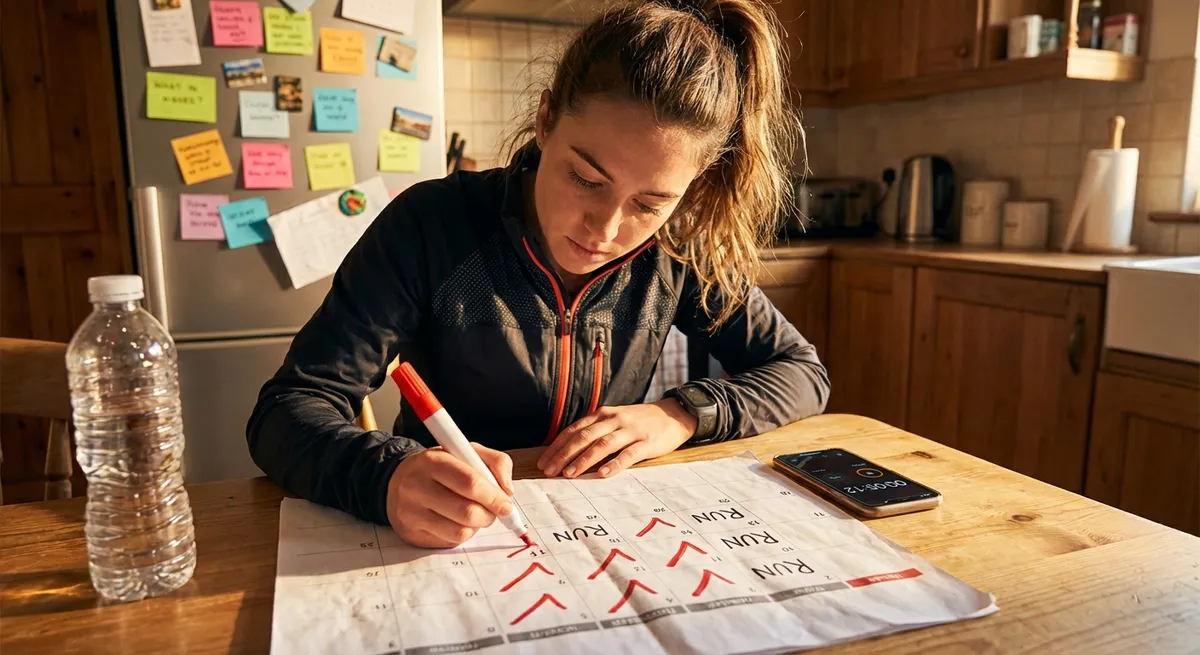
Accountability gets real the moment your effort leaves your head and hits the page, the app, or the screen. As long as everything lives in your memory—“I work out a lot,” “I eat pretty healthy,” “I’m trying my best”—it’s easy to overestimate the work and underestimate the gaps.
Tracking changes that.
When you see your week laid out in front of you—workouts done, steps hit, sleep logged, water tracked—you no longer rely on feelings. You’re looking at facts. That honesty does two big things: it exposes where you’re slipping and highlights where you’re crushing it. Both matter.
This isn’t about shaming yourself; it’s about owning your story. When you see the truth, you can make real decisions: add a workout, tighten your sleep routine, move more during the day, or celebrate a streak you’ve never hit before. Accountability starts as a mirror, but once you commit to tracking, it quickly becomes a megaphone for your progress.
Tip 1: Track Your “Non-Negotiable” Move Every Day
Instead of trying to track everything all at once, pick one movement metric that becomes your non-negotiable—the thing you track daily no matter what. It could be:
- Total steps
- Minutes of intentional movement
- Number of workouts per week
- Active calories burned
Why this works: one daily metric keeps you locked in without overwhelming you. If you decide, “I track my movement every day. Period,” you’re building a habit of showing up, not just occasionally checking in.
Action moves:
- Choose a single metric that feels doable but slightly challenging.
- Track it in the same place every day (app, notes, calendar, or fitness platform).
- Review it weekly and ask: “Is this pushing me, or just keeping me comfortable?” Adjust as needed.
This small act of daily tracking becomes a backbone for your accountability. When the day gets chaotic, your mind might forget what matters—but your non-negotiable doesn’t.
Tip 2: Log Your Workouts Like You’re Building a Highlight Reel
Stop treating your workouts like random events and start treating them like episodes in a season you’re proud to watch. Every session you log is another “highlight” in your fitness story.
Don’t just write “leg day” or “ran 3 miles.” Capture details that prove your effort:
- Exercises, sets, and reps
- Weight used or pace/heart rate
- How you felt before vs. after
- One quick win from the session (heavier weight, more reps, better form, stronger mindset)
- Evidence that you show up even when you’re tired.
- Evidence that your strength and endurance are building over time.
- Evidence that you’re not the same person you were a month ago.
When you do this consistently, your log becomes evidence:
On the days you want to quit, scroll back. Those pages and entries are you, already doing the hard things. That’s accountability in its loudest form: proof that you’ve done the work and a reminder that you’re not starting from zero.
Tip 3: Use Weekly “Honest Check-Ins,” Not Just Daily Streaks
Daily streaks are great—until you break them and feel like everything’s ruined. Weekly check-ins are different. They zoom out and keep you accountable to the bigger picture, not just one off day.
Once a week, sit down for 5–10 minutes and ask yourself:
- How many workouts did I plan vs. how many did I complete?
- Did my steps, movement, or active minutes go up, down, or stay flat?
- How was my sleep and recovery?
- What got in my way this week—and what did I handle like a champion?
Write these answers down. Don’t guess. This small ritual turns your week into data you can actually use.
If your completion rate is low, your plan might be unrealistic—not a failure, just a bad strategy. If your completion rate is high but your progress feels slow, maybe it’s time to turn up intensity or duration. Weekly check-ins help you adjust like an athlete, not react like a quitter.
Tip 4: Track Recovery Like It’s Part of the Workout
Most people only track how hard they go. Accountable athletes track how well they recover. Your body doesn’t build strength, endurance, or power during the workout; it builds it after—when you sleep, refuel, and recover.
Make recovery trackable, not optional. You can:
- Log sleep duration (and quality if your device supports it).
- Note resting heart rate trends.
- Record rest days and what you did (stretching, walking, mobility).
- Track how sore or energized you feel on a simple 1–5 scale.
Why this matters for accountability: if you’re constantly exhausted, skipping workouts, or plateauing, your data might show the real issue isn’t your motivation—it’s your recovery. You’re not “lazy”; you’re under-recovered.
When you track recovery, you can:
- See patterns between poor sleep and missed workouts.
- Protect rest days without guilt because they’re part of the plan.
- Push harder with confidence on days your recovery looks strong.
Accountability isn’t just “Did I grind?” It’s “Did I take care of my body so I can keep grinding?”
Tip 5: Make Your Numbers Visible Where You Can’t Ignore Them
Accountability dies in the dark. If your stats live deep in an app you never open, they’re easy to forget. Make your fitness data visible and in your face.
Ideas to bring your numbers to life:
- Put a whiteboard or sticky note chart where you see it every day (desk, fridge, bathroom mirror).
- Use phone widgets that show steps, activity rings, or workout totals on your home screen.
- Set weekly calendar reminders labeled with your goals (e.g., “4th workout of the week—go earn it”).
- Share a summary screenshot of your progress with a trusted friend or group who encourages effort, not perfection.
Visibility builds pressure—the good kind. When your numbers are out in the open, it’s harder to pretend you’re doing “pretty well” if the data says you’ve skipped three workouts in a row. It also makes your wins impossible to ignore. That line of completed workouts? That stack of checkmarks? That’s your accountability, staring back at you.
Conclusion
Accountability isn’t a personality trait you either have or don’t. It’s a system you build. Tracking is the backbone of that system. When you log your movement, capture your workouts, review your weeks, track your recovery, and keep your numbers visible, you’re not just hoping to stay on track—you’re engineering it.
Your next level won’t show up by accident. It shows up because you can look at your data and say, “This is what I did. This is what I’m changing. This is where I’m going.” Own your effort, document your grind, and let your tracking turn into proof that you’re exactly the kind of person who follows through.
Sources
- Physical Activity Guidelines for Americans, 2nd edition – U.S. Dept. of Health & Human Services - Official recommendations on weekly activity levels and why consistent movement matters
- CDC – Physical Activity Basics - Overview of the health benefits of activity and guidance on tracking and improving your habits
- American Heart Association – The Benefits of Physical Activity - Explains how regular, trackable activity supports heart health and long-term fitness
- Harvard T.H. Chan School of Public Health – Sleep and Health - Details the connection between sleep, recovery, and performance
- Mayo Clinic – Exercise: How to Get Started - Practical advice on beginning and structuring an exercise routine you can track and maintain