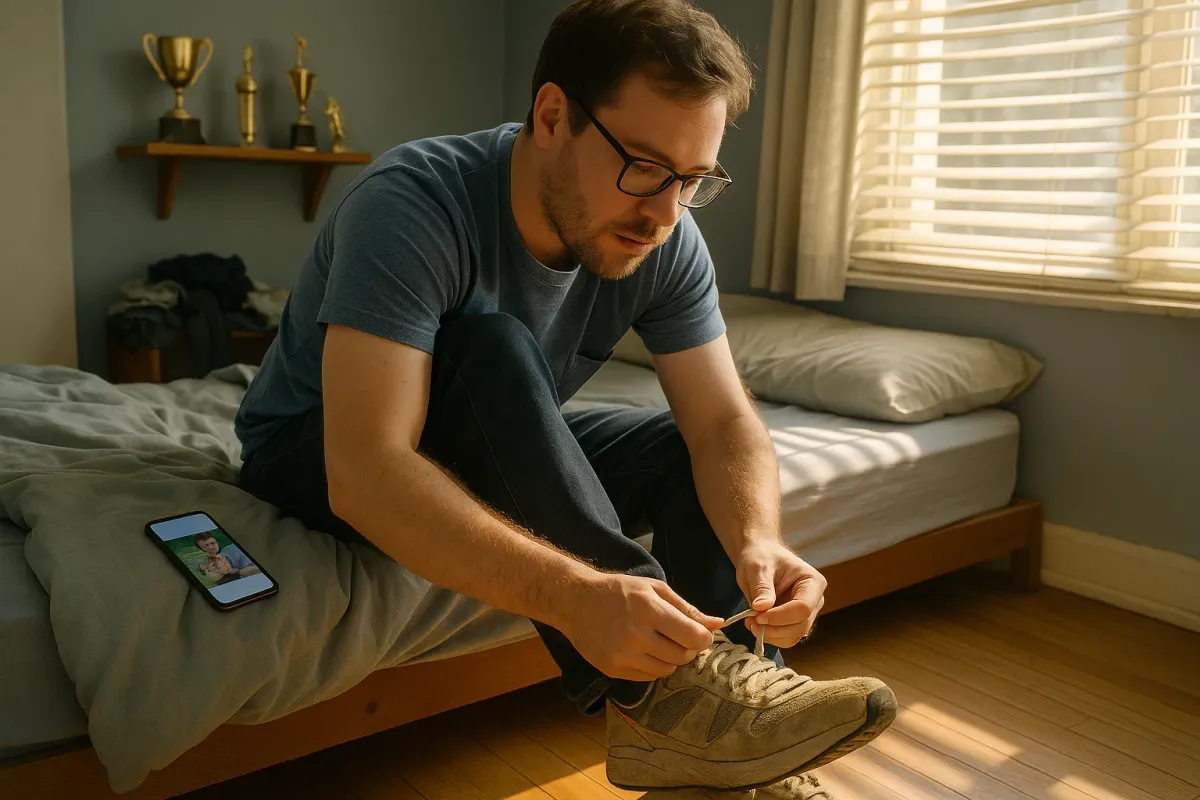
Here’s the twist: instead of letting that nostalgia drag you into “I’m too old for this,” use it as rocket fuel. Those memories prove one thing—you’ve already lived through entire eras. You can absolutely start a new one: your Fitness Comeback Era. And today, we’re turning that “creaking joints” vibe into tracked, measurable progress.
Own Your Era: Stop Comparing, Start Capturing
The viral nostalgia trend is all about comparing “then vs. now.” But most people do it emotionally, not accurately. In fitness, that’s a trap. You remember being fitter, faster, lighter—but you don’t remember the details.
Start by capturing your real “now.” Snap a front/side/back photo, jot down how many pushups you can do, how long you can walk without stopping, and how your body feels (energy, sleep, aches). This isn’t punishment—it’s your Season 1, Episode 1. Track it in a simple notes app, a spreadsheet, or a dedicated fitness app. When nostalgia hits—“I used to be so fit”—you’ll have proof of how far your present‑day self has come, not just how far you drifted.
Turn Nostalgia Into Non‑Negotiables
That “Are you this old?” headline went viral because shared memories feel powerful. Use that same psychology on yourself. Pick 1–2 “non‑negotiables” that future‑you will look back on and say, “That’s when everything changed.”
Examples:
- 10-minute daily walk, no matter what
- 30 bodyweight squats before your morning coffee
- Lights out by 11 p.m. on weeknights for recovery
Track them in the simplest way possible: a calendar with X’s, a habit app, or even sticky notes on your mirror. Your only metric: Did I honor my non‑negotiable today—yes or no? When you see those streaks adding up, accountability stops feeling like pressure and starts feeling like pride.
Build a “Throwback You” Tracker
The nostalgia trend celebrates old objects. Let’s celebrate an old you—not by chasing your exact past body, but by borrowing its strengths.
Think of a time in life when you felt physically better—even if it was just “I could take the stairs without dying.” Write down 3 things from that season:
- How you moved (e.g., walked to school, played a rec league sport)
- How you ate (e.g., fewer takeout meals, more home cooking)
- How you rested (e.g., earlier nights, less screen time)
Now build a “Throwback You” tracker: pick one habit from that era and reintroduce it today. Track it like a game level—how many days this week did you live like that version of you in one small way? Maybe it’s walking to do local errands, cooking at home twice a week, or stretching for 5 minutes before bed. Nostalgia becomes a bridge, not a guilt trip.
Make Your Metrics Fun, Not Punishing
A lot of people fall off because tracking feels like homework. But look at what’s popping on social feeds right now—people love gamified, shareable stuff: countdowns, side‑by‑side photos, progress bars. Do the same with your fitness, but keep it light and fun.
Ideas you can start today:
- Progress bar screenshot: Pick a monthly goal (e.g., 20 workouts). Update a colorful progress bar in Canva or a notes app each time you complete one.
- Step “quests”: Instead of “10,000 steps,” make missions: “Walk enough today to ‘travel’ from my house to my favorite childhood hangout—track distance in your app and note milestones.”
- Rep playlists: Create a playlist with one song assigned to pushups, another to squats, another to planks. Each time a song plays, you do the move and log your total reps for that song each week.
Your brain loves games. When tracking feels like a challenge instead of a chore, you’ll want to keep your numbers moving.
Share the Journey, Not Just the Glow‑Up
Social media is flooded with “before and after” shots, but those nostalgia posts taking off right now remind us: the in‑between is what people really connect with. Don’t wait until you have a dramatic “after” picture to be accountable.
Pick a format that feels safe for you and commit to sharing process, not perfection:
- A weekly “Fitness Check‑In Friday” story with your workout count and one lesson learned
- A close‑friends IG story or private group chat where you post sweaty selfies or step counts
- A simple text to a friend: “Here’s today’s workout logged. Ask me about it tomorrow.”
That tiny public promise flips a switch in your brain. You’re not just “trying to get fit”—you’re the person who shows up and shares the real journey. That identity shift is what keeps you moving when motivation dips.
Conclusion
The internet is busy asking, “Are you this old?” Let your answer be: “Old enough to know my excuses—and outgrow them.”
You don’t need a perfect plan, a gym membership, or a time machine. You need a starting point, a few honest metrics, and the courage to track your story in real time. Turn your nostalgia into momentum, your memories into metrics, and your “one day” into day one.
Your Fitness Comeback Era isn’t coming. It’s here. Log it. Track it. Own it.