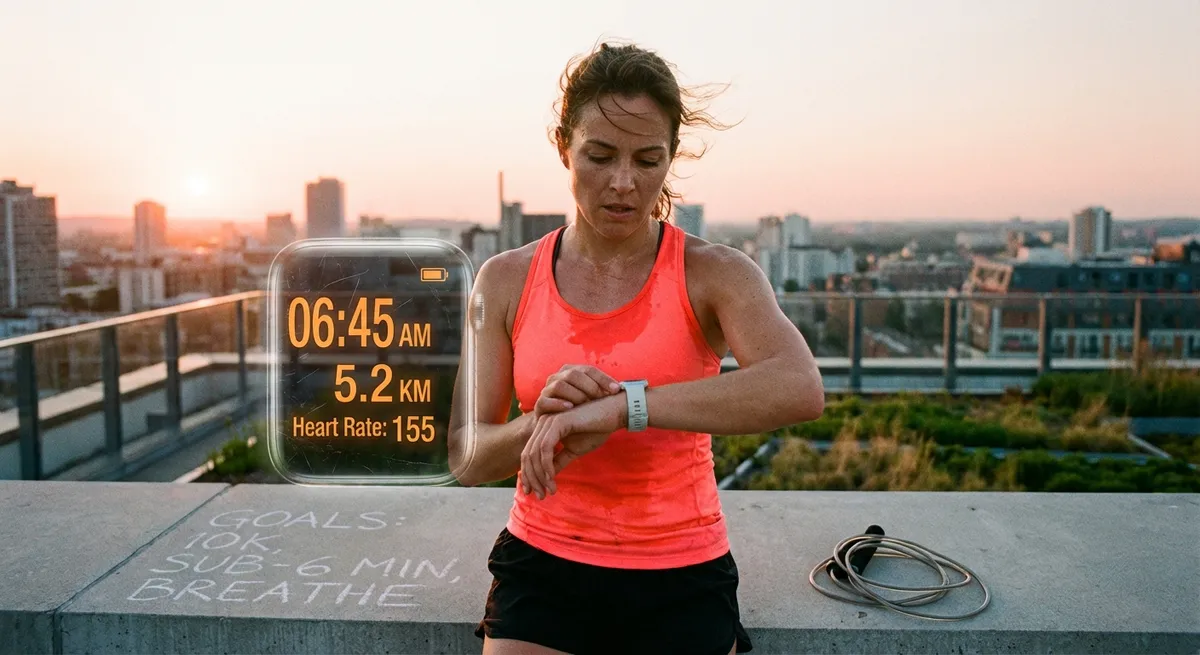
Why Tracking Supercharges Your Accountability
Accountability gets real the moment your workouts and habits leave your head and land somewhere you can see them. When you record your actions, you turn vague intentions into visible data: reps, steps, minutes, weight, sleep, mood. That record tells the truth—no arguing, no excuses, just facts.
Research shows that self‑monitoring (like logging workouts, steps, or food) is strongly linked to better health and weight‑management outcomes because it increases awareness and consistency over time. When you see your streaks, patterns, and progress, your brain gets a hit of reward that makes you want to keep going. That’s not just motivation—it’s momentum.
Tracking also shrinks big goals into tiny, winnable actions. “Get fit” is vague. “Hit 8,000 steps today and log them” is clear. Hit that small target, check it off, and you’ve got a win you can feel. String enough of those wins together, and suddenly you’re the person who doesn’t just talk about getting fit—you live it, daily.
Tip 1: Track Behaviors, Not Just Outcomes
Most people only track the “end numbers”: weight on the scale, PRs in the gym, time on the stopwatch. Those are important—but they don’t tell the whole story. Accountability lives in what you do, not just what you get.
Start tracking your inputs:
- Workouts completed (yes/no)
- Sets and reps performed
- Daily step count
- Hours of sleep
- Water intake
- Protein or veggie servings
- Stretching or mobility minutes
Why this matters: you can’t always control the outcome (like the number on the scale), but you can absolutely control your actions. When you log behaviors, you give yourself more ways to win. Didn’t hit a new PR today? Cool—but you still showed up, finished your sets, and logged the session. That’s victory.
Action move: Pick 3 daily behaviors to track—think “workout minutes,” “steps,” and “water.” Keep the list short and focused. Your goal is consistency, not perfection.
Tip 2: Make Your Tracking Visual and Impossible to Ignore
If your tracking lives in a note you never open, it’s not accountability—it’s decoration. You need your progress in your face every day.
Some powerful visual options:
- Wall calendar: Put a big X on every day you work out or hit your step goal. Watch your chain grow.
- Whiteboard or sticky notes: Write weekly goals and cross them off as you nail them.
- Home screen habit widget: Use a habit or tracking app and place it front and center on your phone.
- Fitness app dashboards: Use charts, streaks, and weekly summaries as your scoreboard.
The psychology is simple: when you can see your effort, you’re far less likely to skip. Breaking a visible streak feels like a loss, and your brain hates losing. Use that to your advantage.
Action move: Set up one visual system you literally can’t avoid—a calendar by your bedroom door, a whiteboard in the kitchen, or a bold widget on your phone. Your actions should be the first and last thing you see each day.
Tip 3: Attach Tracking to Something You Already Do
Accountability dies when tracking feels like “one more thing” on a long to‑do list. The fix? Turn tracking into a habit that rides on the back of a routine you already have.
This is called “habit stacking”—you pair a new behavior with a current one so it becomes automatic. For example:
- After you brush your teeth at night, you log your steps and water.
- After you finish your workout, you immediately record sets, reps, and weight before leaving the gym.
- After your morning coffee, you check your daily movement plan and set your step or workout target.
- After you eat dinner, you log your nutrition for the day.
By anchoring tracking to something you already do on autopilot, you remove the decision fatigue. You don’t ask “Should I track?”—you just do it because that’s what happens after the trigger task.
Action move: Choose one daily routine you never miss (coffee, brushing teeth, lunch break). Decide that your fitness logging always happens right after that. No debate, no delay.
Tip 4: Use Simple Metrics and Celebrate Small Wins Fast
Complex systems kill consistency. If your tracking feels like doing taxes, you’ll quit by day three. The goal is to track in seconds, not minutes.
Keep it simple:
- Instead of measuring every macro, start with protein servings or vegetable servings per day.
- Instead of tracking 15 workout variables, log exercise name, sets, reps, weight, and how it felt (easy, solid, tough).
- Instead of obsessing over calories burned, track daily movement minutes (e.g., 30 minutes of any activity).
Then, celebrate fast. Don’t wait until you drop 20 pounds or run a marathon to be proud. Be proud when you:
- Complete all planned workouts this week
- Hit your step goal five days in a row
- Add one rep or a few pounds to a lift
- Choose a walk over scrolling and log it
That instant reward—checking the box, seeing the streak, writing “done”—reinforces the behavior wiring in your brain. Small wins, stacked often, build unshakable accountability.
Action move: Trim your tracking to the essentials and make your system “60-seconds-or-less.” If it takes longer than that to log your day, simplify.
Tip 5: Share Your Check-Ins With Someone Who Will Call You Out
Private tracking is good. Shared tracking is next-level accountability. When another human can see whether you did what you said you’d do, everything changes.
Ways to share your check-ins:
- Join a group chat where everyone posts their daily workout, steps, or screenshots from their fitness app.
- Pair up with an accountability partner and send each other a quick “Done” photo (sweaty selfie, finished workout log, step count).
- Use social media stories once or twice a week to post your progress (not for validation, but for commitment).
- Participate in online or in‑app challenges where your activity is visible to the group.
The key is choosing people who won’t let you slide quietly. You’re not looking for cheerleaders only—you want someone who’ll ask, “You good? Where’s today’s check‑in?” when you go silent.
Action move: Pick one person or one group and tell them your exact plan: “I’m checking in with my workouts and step count every day this month. If I go quiet, call me out.” Then back it up with consistent logs.
Conclusion
Accountability isn’t about having more willpower; it’s about building a system that makes your actions visible, simple, and hard to skip. When you track your behaviors, make your progress visual, attach logging to existing routines, keep your metrics simple, and share your check‑ins with others, you turn fitness from a vague goal into a daily contract with yourself.
You don’t need to overhaul your entire life to get started. Today, choose your three behaviors, set up one visual tracking tool, and lock in one habit stack. Then show up for that plan, day after day. Your future self isn’t built by massive, once‑in‑a‑while moves—it’s built by small actions you can prove you took. Log it, own it, and let every check‑in be one more receipt that you’re becoming the person you said you’d be.
Sources
- Centers for Disease Control and Prevention – Physical Activity Basics - Overview of recommended activity levels and why consistent movement matters for health
- American Heart Association – The Power of Self-Monitoring - Explains how tracking behaviors like activity and diet supports long-term health changes
- National Institutes of Health – Self-Monitoring in Weight Management - Research review showing that self‑monitoring (tracking) is strongly associated with better weight-loss and maintenance outcomes
- Harvard T.H. Chan School of Public Health – Healthy Living Guide - Evidence-based guidance on building sustainable health habits, including movement and diet
- James Clear – How to Build New Habits - Practical explanation of habit stacking and how pairing new habits with existing routines increases consistency