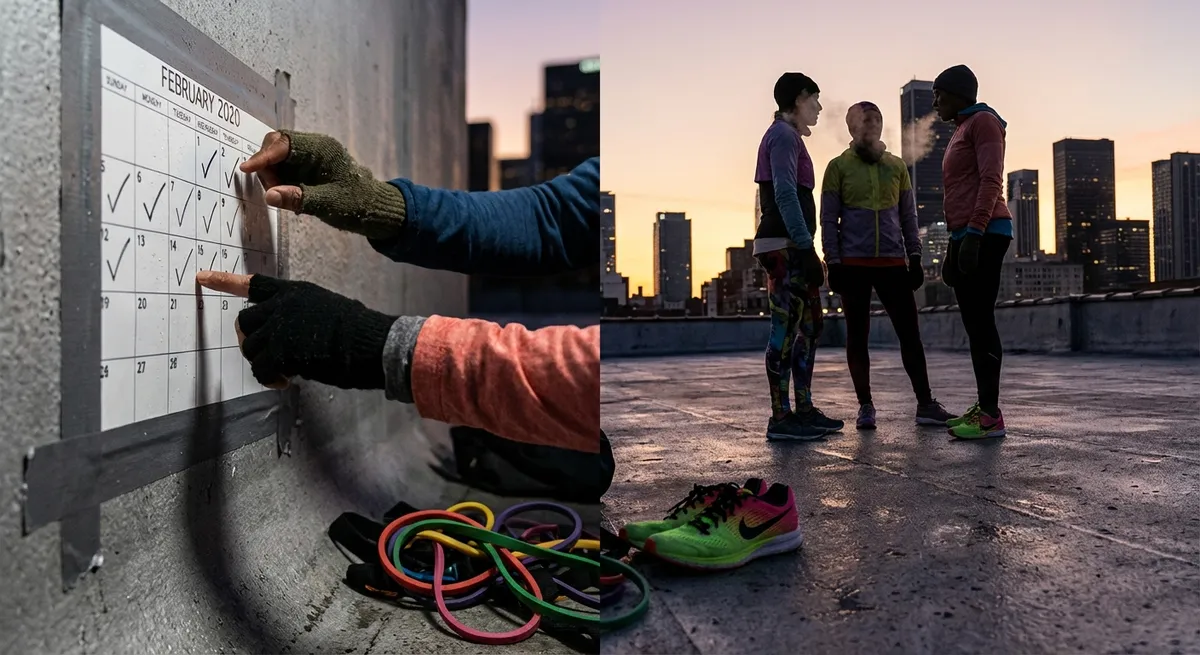
Your fitness goals don’t need more “someday.” They need clear receipts that you’re doing the work today. Let’s turn tracking from a boring chore into your personal hype system—one that calls you out, backs you up, and keeps you moving forward.
Tip 1: Track The Habit, Not Just The Highlight Reel
Most people only track the “big” moments—PRs, long runs, heavy lifts—and then wonder why progress feels slow. Real accountability comes from tracking the boring stuff you repeat daily. Log your workouts, even if it’s “10-minute walk.” Log your water, your sleep, your steps, your stretches. Every small action deserves a checkmark. When you see a streak of ordinary days lined up, you realize that consistency—not drama—is what changes your body and mindset. Start simple: one habit to track this week, then stack more once that feels automatic.
Tip 2: Make Your Tracking Method So Easy You Can’t Ignore It
The best tracking method isn’t the fanciest—it’s the one you’ll actually use every day. If you love apps, use a fitness tracker or logging app that sends reminders and shows clear trends. If you’re a visual person, use a calendar and mark workout days with loud, colorful symbols. If you’re old-school, keep a notebook or whiteboard where you see it daily. The key is zero friction: it should take under a minute to log what you did. The easier you make it, the less room you leave for excuses. Turn tracking into a non-negotiable like brushing your teeth—you don’t debate it, you just do it.
Tip 3: Set Check-In Times Instead Of Vague Intentions
“I’ll track it later” usually turns into “What did I even do this week?” Accountability thrives on structure, not vibes. Choose specific check-in times: a quick morning check-in to set your plan, and an evening check-in to record what actually happened. In the morning, write or log your workout, movement goal, or nutrition focus. At night, confirm: Did you do what you said? If yes, celebrate it. If not, don’t spiral—adjust and move on. These daily check-ins build a rhythm where you’re constantly closing the loop between intention and action, which is where real growth happens.
Tip 4: Turn Your Data Into Decisions, Not Self-Judgment
Tracking is powerful, but only if you actually use the information. Instead of looking at your logs and thinking, “I’m failing,” ask, “What is this telling me?” If your step counts dip on certain days, plan short walks or standing breaks ahead of time. If your energy crashes after specific meals, experiment with different food choices. If you keep missing workouts in the evening, try mornings or shorter sessions. Your tracking is a feedback system, not a judgment zone. Treat your data like a coach giving you clues, not a critic pointing out your flaws.
Tip 5: Make Your Wins Loud And Your Misses Learning Moments
Accountability sticks when it feels rewarding, not punishing. Use your tracking to shine a light on every win—long streaks, tough workouts completed when you were tired, extra reps, better sleep, more water, even choosing a walk over the couch. Celebrate them with small rewards: a new playlist, a nicer water bottle, a saved screenshot of your streak. When you miss a day, don’t erase or hide it. Keep it visible and add a quick note: “Long day, needed rest,” or “Skipped—plan earlier tomorrow.” This turns a “bad day” into a clear lesson and makes your overall journey look honest and strong, not fake and flawless.
Conclusion
Accountability isn’t about being watched by others—it’s about watching yourself with clarity and honesty. Every time you track a workout, a walk, a meal, or a glass of water, you’re casting a vote for the person you’re becoming. You’re not hoping for change—you’re documenting it.
Lock in your fitness promise with daily check-ins. Keep it simple, keep it visible, and keep it honest. Your future self is going to look back at these receipts and say, “That’s the moment I stopped wishing and started owning my results.”