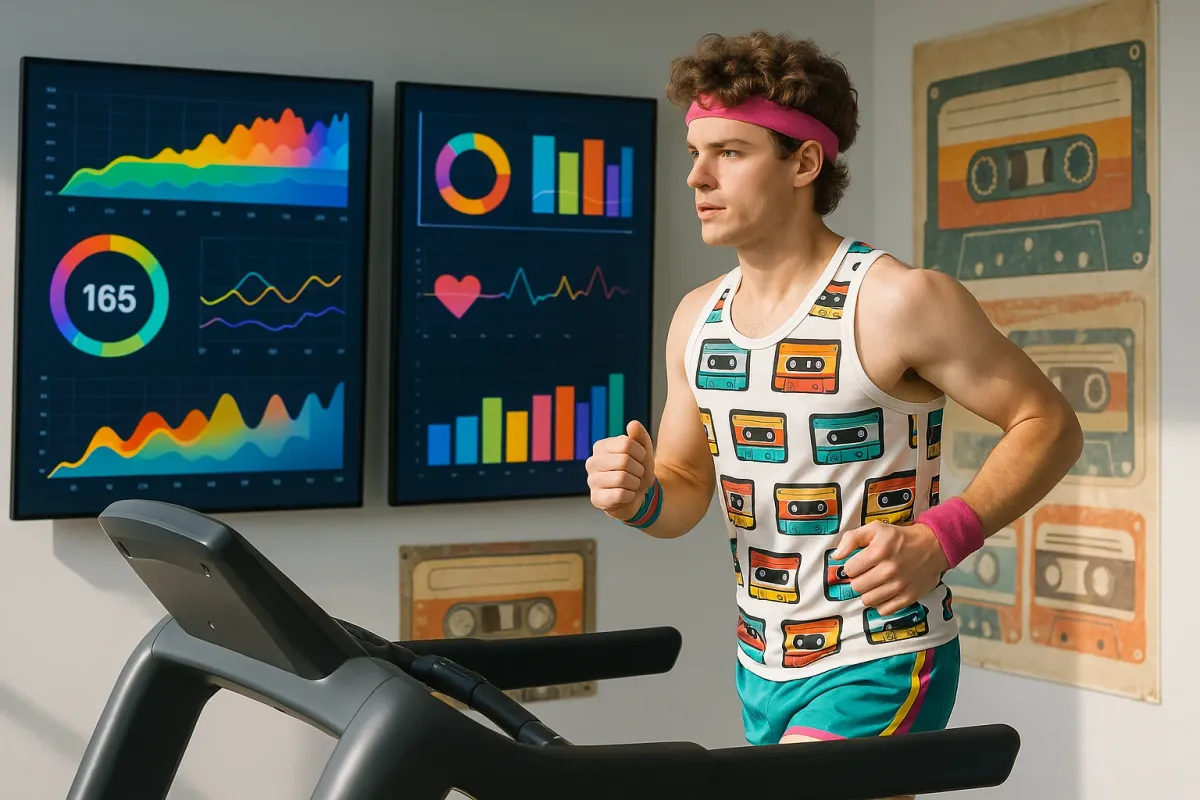
Here’s the twist: your fitness life is going through the exact same evolution. We’ve gone from scribbling workouts in notebooks to having entire training histories, heart rates, and PRs in our pockets. The world moved on from mixtapes because streaming was simply better. And it’s time to give your workout tracking the same kind of upgrade.
Let’s take that nostalgic “How far we’ve come” energy and channel it straight into your fitness. No more guessing, no more “I think I worked out hard last week.” You’re going to know. You’re going to see it. And you’re going to feel unstoppable.
Tip 1: Build a “Fitness Mixtape” Log You’ll Actually Replay
Old-school mixtapes told the story of a chapter in your life. Your workout tracking should do the same. Instead of random notes or disconnected app entries, start treating your logs like a curated highlight reel of your effort. Pick ONE main home for your tracking—whether it’s an app like Strava, Strong, or just Google Sheets—and commit to updating it after every single session for the next 30 days.
Don’t just write “leg day” or “30 minutes run.” Record the details that make it replay-worthy: exercises, sets, reps, weight, distance, time, how you felt, and one sentence about your mood or energy. Over time, this becomes your “album” of progress, not a pile of random tracks. When motivation dips, scroll back and listen to the story you’ve been writing: the days you showed up tired, the PRs you didn’t think you’d hit, the bad weeks you survived. That history is your proof that quitting isn’t in your DNA.
Tip 2: Trade Vague Goals for Trackable “Singles” You Can Drop Weekly
The internet is obsessed with then-vs-now photos and “how it started vs how it’s going” posts—and they’re powerful because they’re specific. Your tracking should work the same way. Ditch the generic “get fit” goal. Instead, break your journey into smaller “singles” you can release every week and measure clearly.
For example:
- “Add 10 lbs to my squat in 4 weeks”
- “Run a 5K without walking by the end of next month”
- “Hit 3 strength workouts per week for the next 21 days”
Now wire these directly into your tracking system. Create a mini progress bar or a simple weekly checkpoint. Each time you log a workout, you’re not just checking a box—you’re pushing that single up the charts. Accountability explodes when every session has a defined purpose and a clear metric attached to it. You’re not just working out; you’re chasing a number you can see.
Tip 3: Turn Your Wearables Into Accountability Partners, Not Accessories
We’re living in the era of metrics—your watch, phone, and even your earbuds can track something. But data without intention is just digital clutter. If you’re wearing a Fitbit, Apple Watch, Garmin, Oura Ring, or using your phone’s health app, it’s time to promote it from “cool gadget” to “coach that calls you out.”
Pick 2–3 metrics that matter most to your current phase:
- Strength phase? Track total sets, key lifts, and weekly training volume.
- Endurance phase? Track distance, pace, and weekly mileage.
- General fitness? Track weekly active minutes, step count, and workout frequency.
Then set alerts or streaks: closing activity rings, step goals, or workout streak counters. When a device pings you at 7 p.m. because you haven’t moved enough—it’s not nagging you, it’s saving you from another “I’ll start Monday.” Let the tech interrupt your excuses. Your job is simple: respond with action, not guilt.
Tip 4: Go Public With Your Progress (The Smart, Sustainable Way)
Social media is flooded with nostalgia posts and “remember when” threads because people love stories. Your fitness journey is a story worth telling too—and sharing it carefully can massively boost your accountability. You don’t have to post shirtless selfies or scale pics; you can share your process, not just your aesthetics.
Try posting:
- A weekly “Workout Recap” screenshot from your app
- A photo of your watch after a run or workout
- A simple text post: “Week 3: 3/3 workouts done. Energy: 7/10. Kept going even when I didn’t want to.”
Tag it, save it, and treat each post like a digital contract with yourself. Your followers don’t have to hype you up (though many will). The real magic is that you know your effort is visible. Like those “obsolete tech” posts remind us how far the world has come, your weekly proof posts will remind you how far you’ve come—and keep you moving when motivation dips.
Tip 5: Create a “Throwback” System to Fuel Your Future
Those trending “obsolete things” posts hit so hard because they show contrast—what used to be vs. what is now. You can steal that psychological punch for your fitness. Build your own “throwback” system directly into your tracking routine.
Once a month, schedule a “Throwback Check-In”:
- Repeat a workout you logged 6–8 weeks ago (same weights, same distance, same structure).
- Record your new performance side-by-side with the old one.
- Note every difference: heavier, faster, more reps, lower heart rate, or even simply “felt easier.”
This isn’t just data; it’s emotional fuel. You’re engineering your own “how it started vs how it’s going” moment. Seeing hard proof that you’re no longer the person who struggled through that workout unlocks a different level of belief. That belief is what drags you to the gym on cold mornings and keeps you lacing up your shoes when your brain says, “Skip it.” Track your throwbacks, celebrate them, and let them remind you that staying accountable works.
Conclusion
The world has moved on from mixtapes and floppy disks, and honestly, your fitness deserves the same level of evolution. Workout tracking isn’t about being perfect; it’s about being undeniable. When you log your sessions, set trackable goals, use your tech with intention, share your journey, and revisit your past performances, you turn “I hope I’m making progress” into “I have the receipts.”
This is your era of metrics, momentum, and measurable wins. Pick one tip from this article and start today—not next month, not New Year’s. Open your app, grab your notebook, or fire up your watch and log your very next move.
Your future self is going to look back at this moment the same way we look at those obsolete gadgets online and say: That’s where everything changed.